Hospitality SaaS in 2026 — one platform instead of a dozen
"Hospitality SaaS" covers more than a hundred categories of software, and the average independent restaurant pays for six to twelve different subscriptions. Aedan Rose collapses reservations, ordering, floor plan, CRM & loyalty, scheduling, inventory and analytics into a single AI-native platform — so you stop paying for overlap. This guide walks through which categories actually move the needle, how they're consolidating, and what a modern all-in-one stack looks like now.
All-in-one · Free plan to start · 30-day trial on paid plans · No long-term contract
The hospitality SaaS landscape, simplified
Every hospitality software vendor falls into one of six functional buckets. You don't need to learn all six, but you do need to recognize them so you stop overpaying for overlap.
1. Reservations & CRM — booking platforms (OpenTable, Resy, SevenRooms, Tock) and guest databases. 2. POS & payments — point of sale and card processing (Toast, Square, Clover, TouchBistro). 3. Staff scheduling — labor management (7shifts, When I Work, Deputy). 4. Analytics & finance — operational reporting and cost-of-goods (Avero, MarginEdge, Restaurant365). 5. Marketing & loyalty — email, SMS, loyalty programs (Mailchimp, Klaviyo, Toast Marketing). 6. Guest engagement & AI — the newer category, includes restaurant AI agents, chatbots, and conversational front doors (Aedan Rose, Intercom-style tools).
The consolidation that's actually happening
For a decade, the hospitality SaaS landscape grew by fragmentation — each new feature spawned a new vendor. That trend reversed around 2023. The buyer fatigue from managing eight subscriptions, eight bills, eight onboardings, and eight data silos became too much. Vendors who can credibly serve two or three buckets now win deals on integration alone.
Aedan Rose's bet was to collapse buckets 1, 3, 5, and 6 into a single platform: reservations + CRM, staff scheduling + chat, marketing automation + analytics, and AI conversation. POS (bucket 2) and finance (bucket 4) stay separate by design — those have entrenched incumbents that do their jobs well. The result is a stack that goes from twelve subscriptions to three (POS + finance + Aedan Rose) without losing capability.
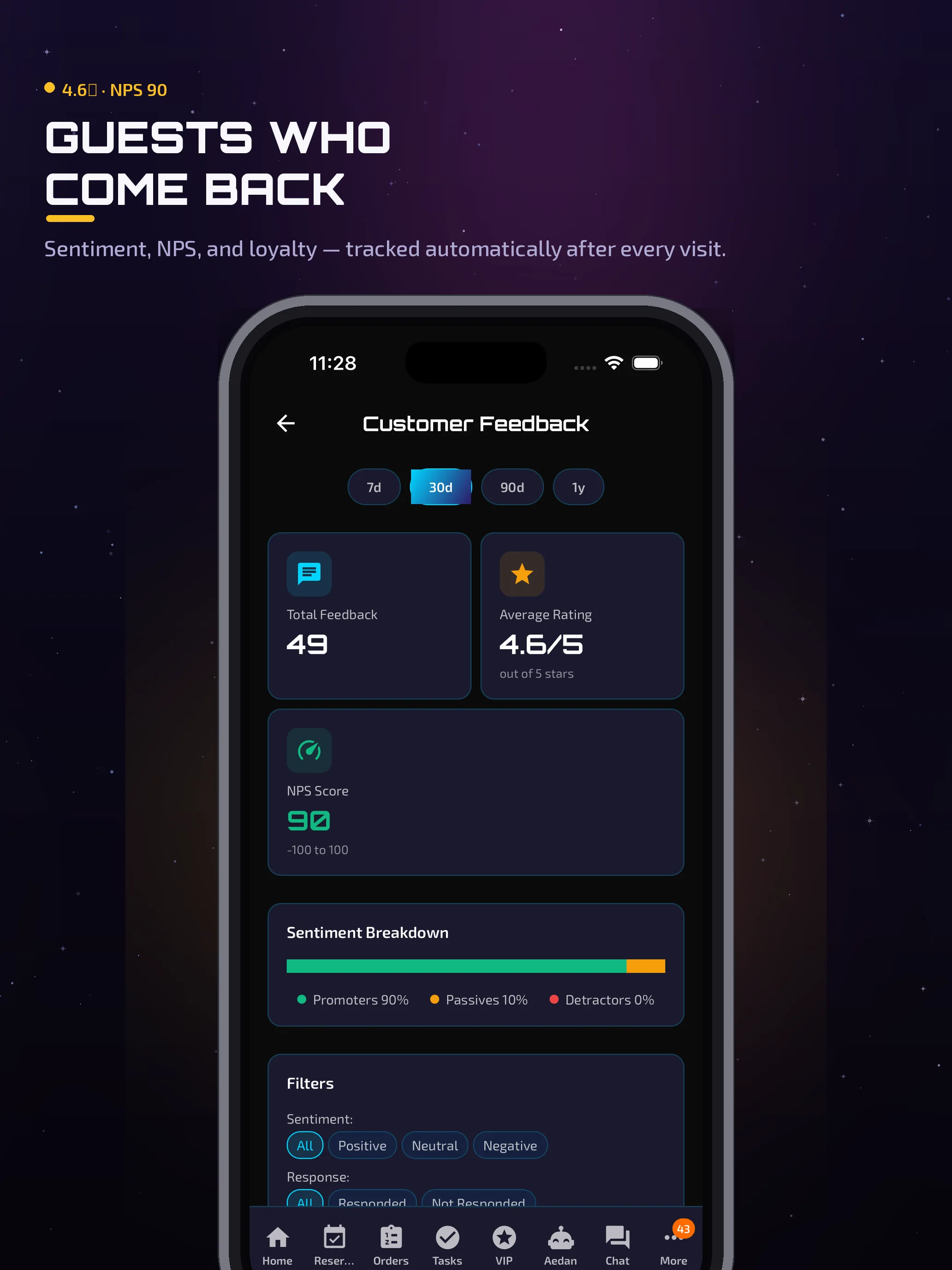
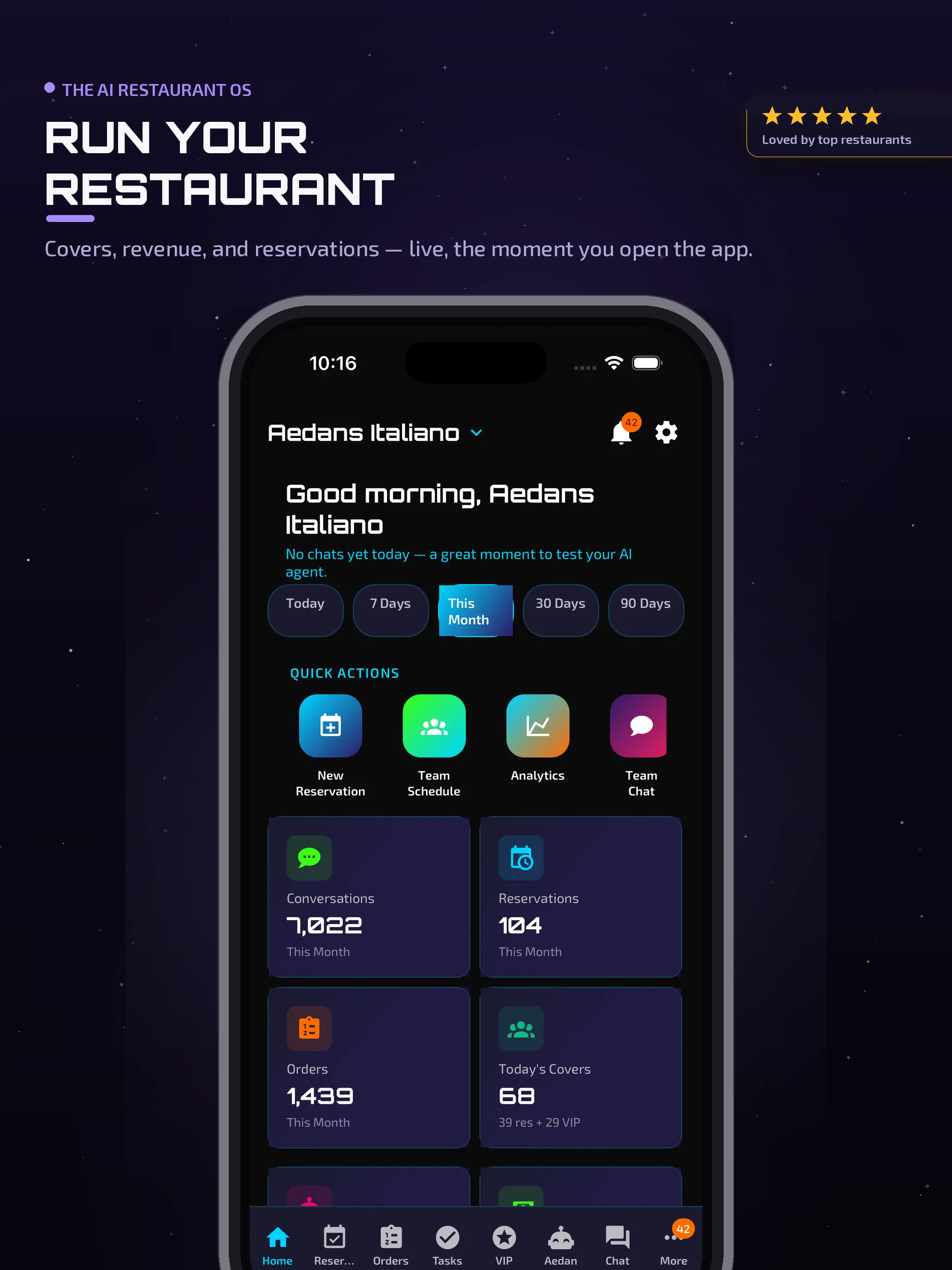
What an all-in-one hospitality platform actually covers
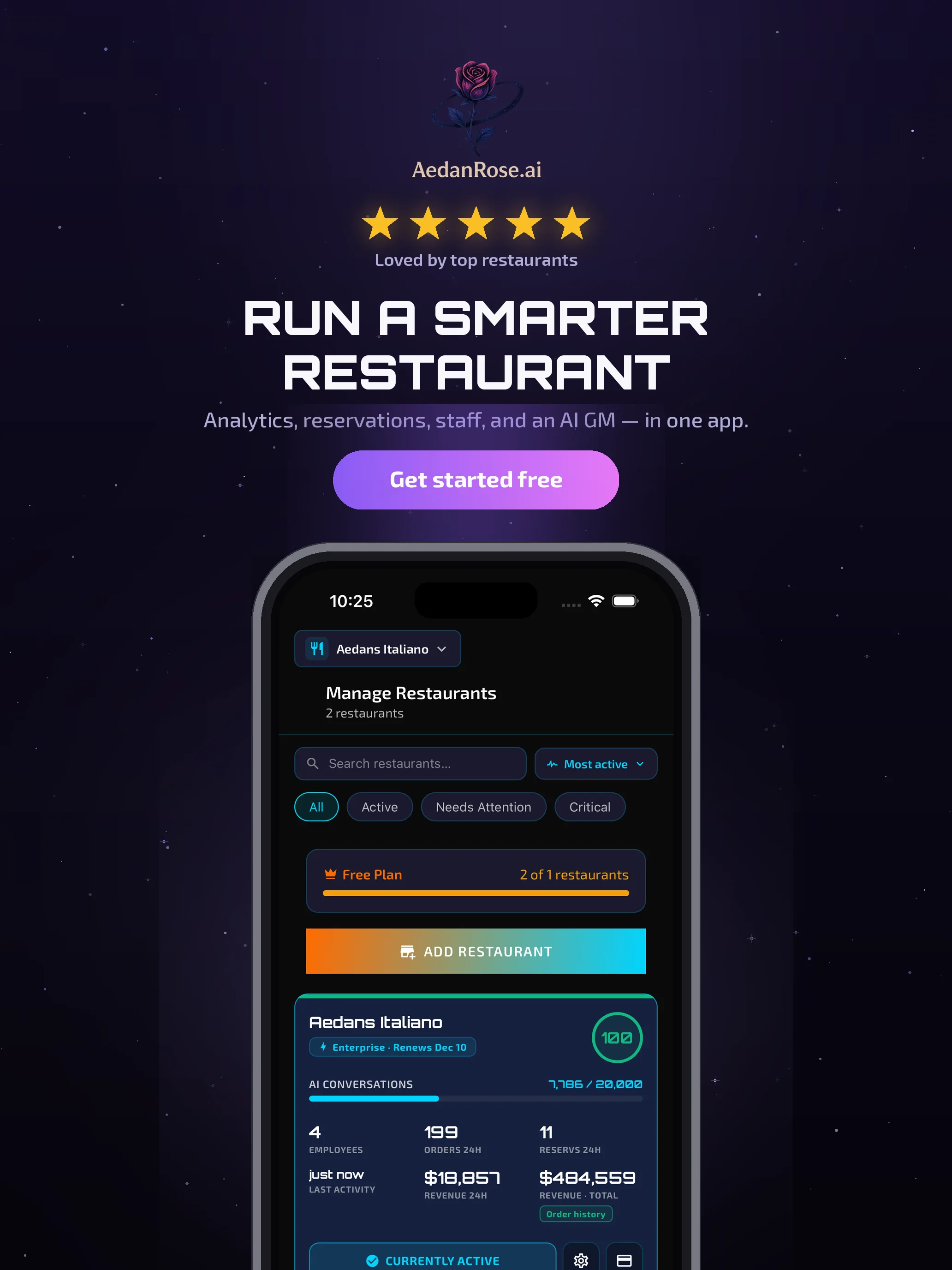
Real product, real screens. These are the buckets Aedan Rose consolidates — each one grows with your plan, under one owner login.
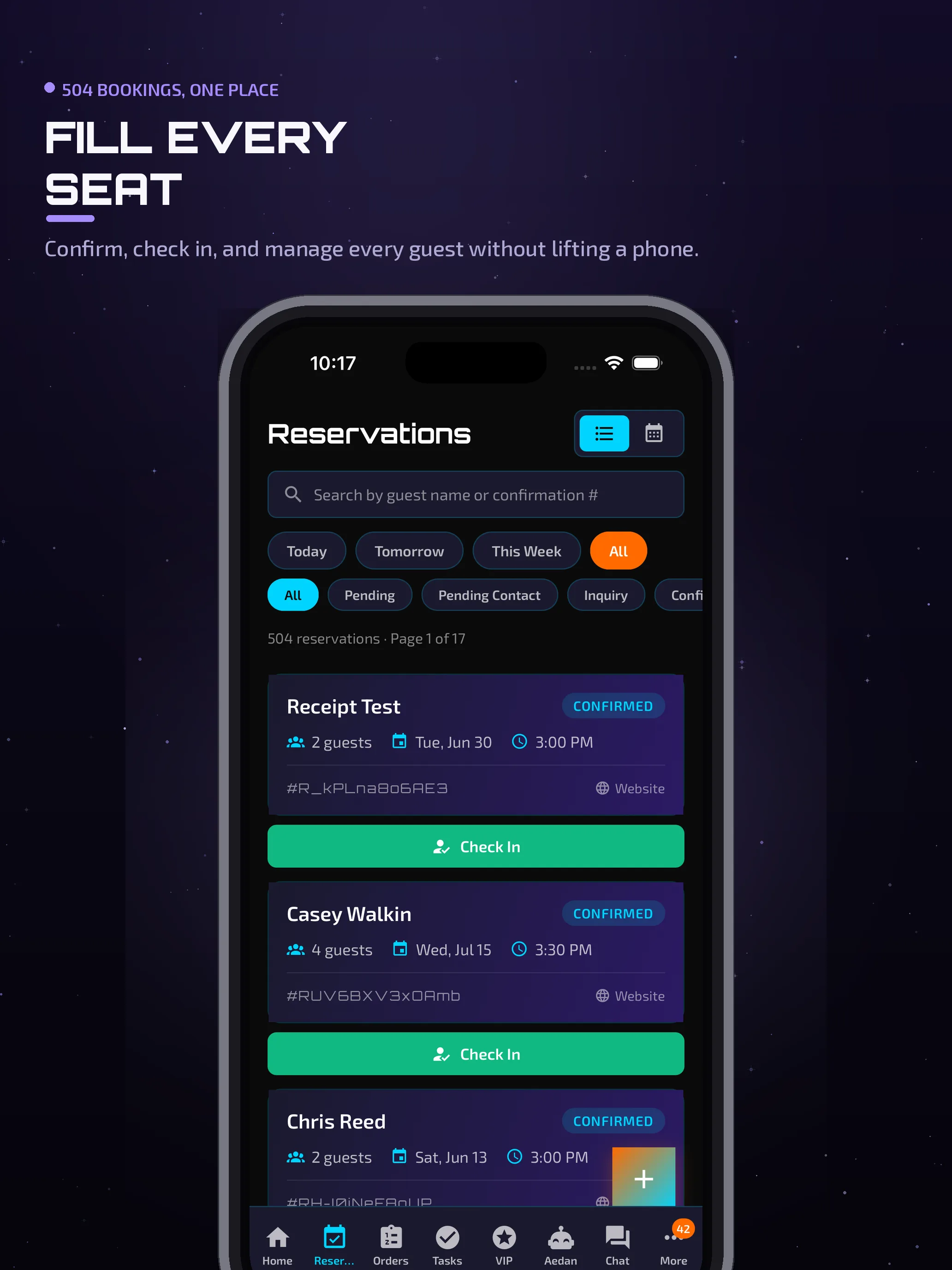
Bookings, floor plan & VIP — no separate reservation vendor
Capture reservations around the clock, map them onto a floor plan you design yourself, and take VIP section bookings with live Stripe deposits — replacing the reservations bucket without per-cover fees.
- 24/7 booking capture with automated confirmations
- Drag-and-drop visual floor plan & table management
- VIP sections & bottle-service deposits
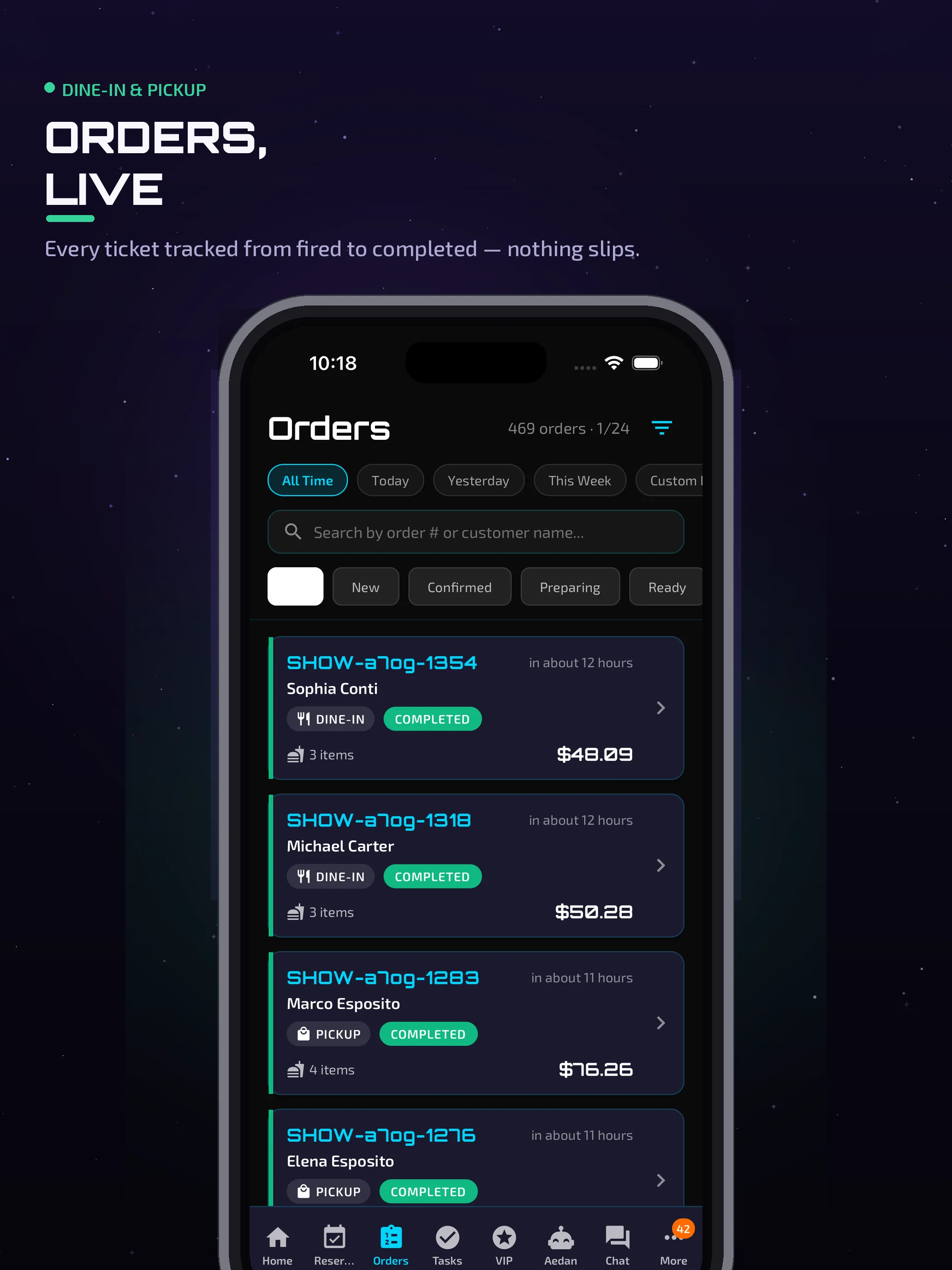
Take orders on your own terms
An embeddable ordering widget and a standalone order page take direct orders with payouts through your own Stripe account — so there's no third-party marketplace between you and your guest.
- Embeddable widget plus a standalone order page
- Direct Stripe payouts to your account
- Per-product-type tax handled automatically
Turn guests into regulars — no marketing add-on
A CRM that builds itself, loyalty and rewards, branded diner email, and win-back automation replace the marketing-and-loyalty bucket. Every guest, order, and campaign lives in the same system.
- Auto-built customer directory & smart segments
- Loyalty, rewards, and diner accounts
- Branded email & automatic win-back follow-ups
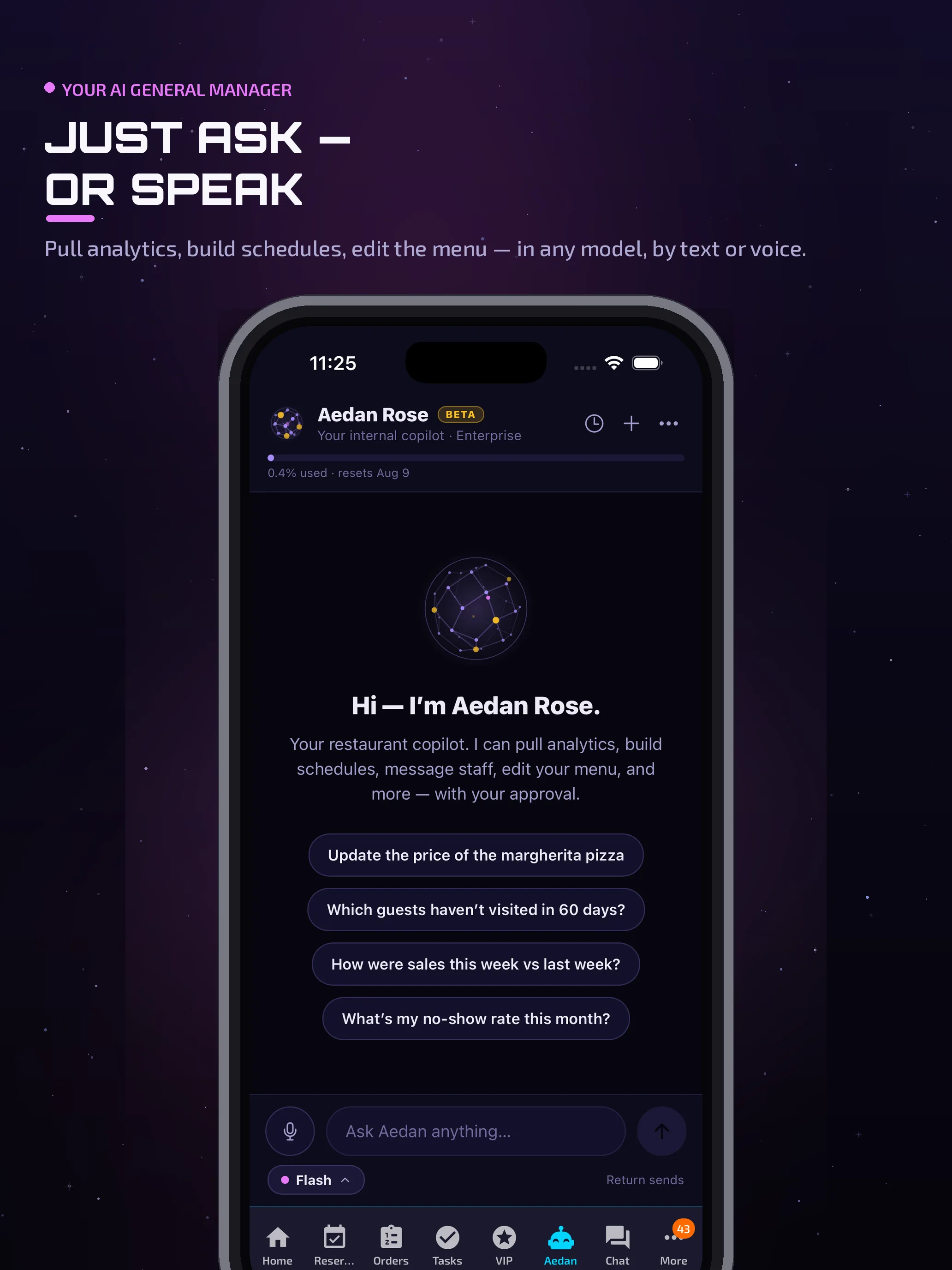
The part no legacy stack has: an AI that acts
On the Manager plan, the Aedan Rose Copilot reads your data and executes work with your approval — building schedules, messaging staff, editing the menu, managing CRM. It's the AI-native layer that stitched-together tools can't offer.
- Plain-language requests that turn into real actions
- High-risk moves need your approval; writes are reversible
- Every action logged — anything that moves money waits for your approval
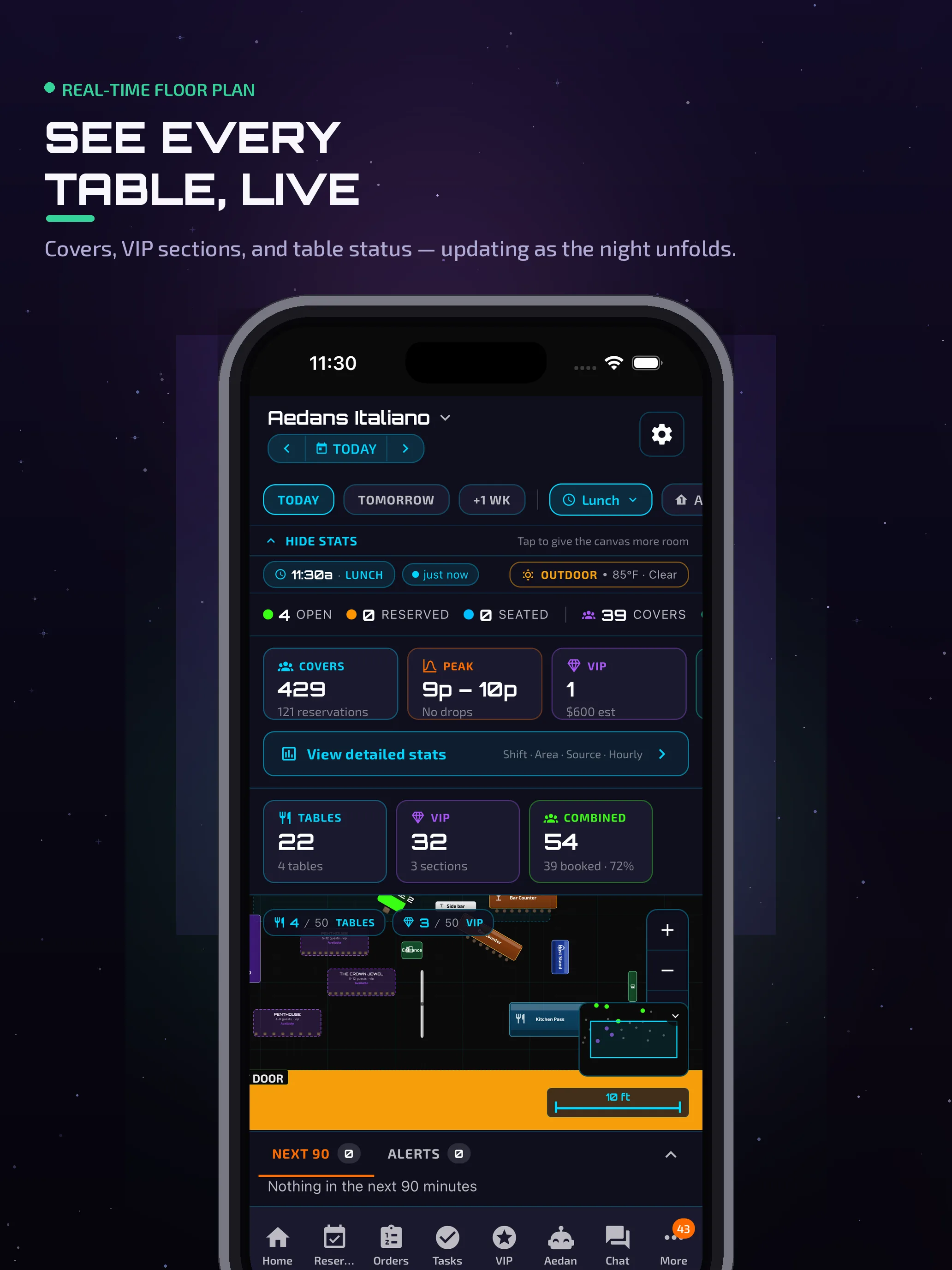
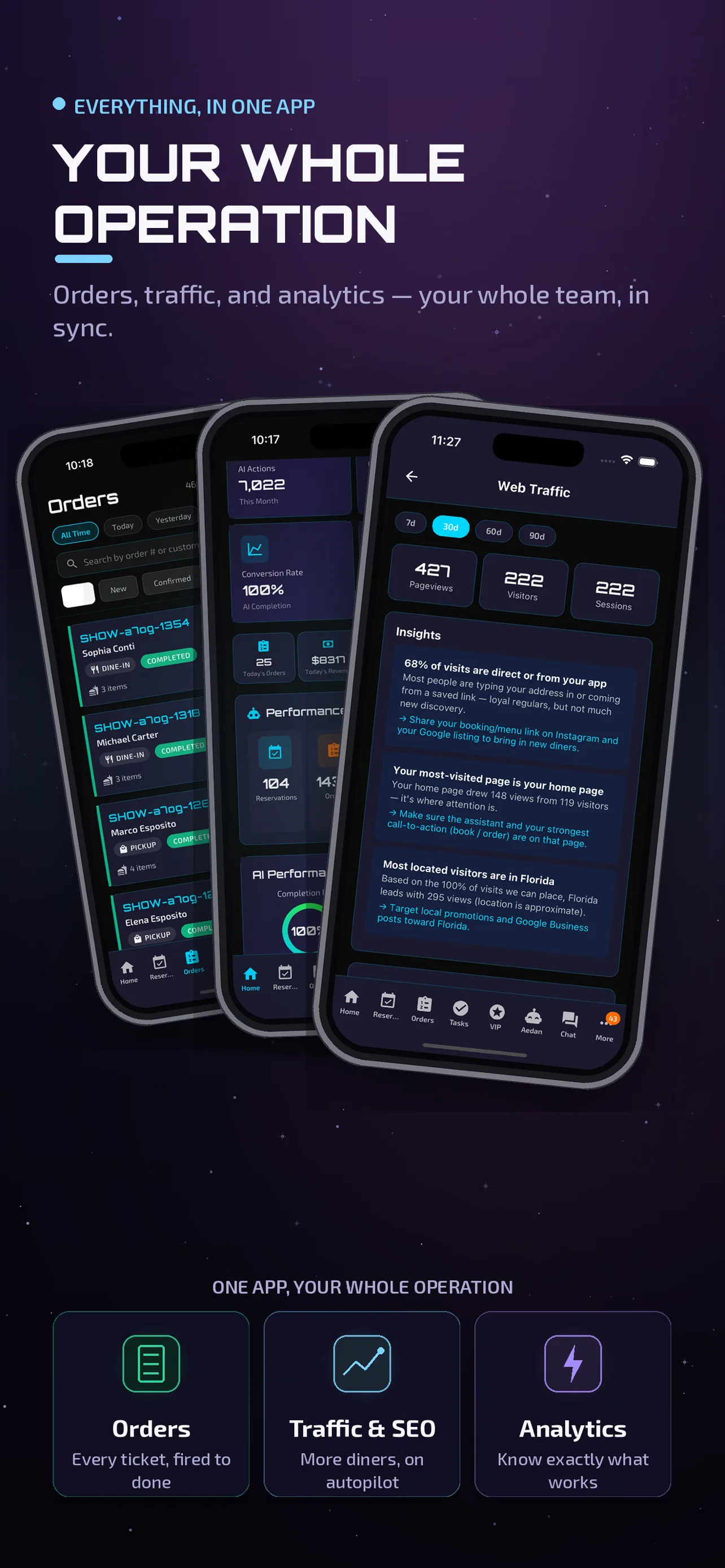
Your whole operation, on every screen
Run the business from the web dashboard and keep your team in sync with free iOS and Android apps — scheduling, team chat, and shift trades in their pocket. One system of record, not a folder of logins.
All-in-one
Reservations, ordering, floor plan, CRM, scheduling, inventory and analytics — no stack of point tools.
100+ languages
The guest-facing AI answers diners around the clock in over 100 languages.
Powered by Stripe
Direct payouts and secure payments through Stripe Connect — you keep the guest relationship.
Free team apps
Free iOS and Android apps for your staff, plus a full web dashboard for you.
How to evaluate hospitality SaaS in 2026
Five questions cut through most vendor pitches.
What does it replace? If the answer is "nothing, it's net-new," be skeptical. Good hospitality SaaS reduces your stack, not grows it.
What's the data isolation model? Especially if you're a multi-location operator. Cross-site data leakage is a legal and operational risk that most vendors handle poorly.
What's the cancellation friction? If "cancel" requires a phone call and a 90-day notice, the product knows you're stuck. Good vendors let you cancel in the dashboard with zero penalty.
What's the upgrade math? Per-seat? Per-transaction? Per-conversation? Each model has a failure case. Avoid per-transaction reservation fees especially — they punish you exactly when your AI starts working.
What's the integration story? Native is better than Zapier. Zapier is better than CSV export. CSV export is better than nothing. A vendor with no integration story will become a data silo within six months.
What modern hospitality SaaS looks like under the hood
A few architectural patterns separate 2026-era vendors from the older platforms still hanging on:
- Cloud-native — runs in your browser and on mobile, no on-premise install
- Real-time — WebSocket or server-sent events for live updates, not 30-second polling
- API-first — every screen is a thin layer over an API, which means you can extend it
- AI-native — LLMs aren't a feature, they're a core capability (see AI reservations)
- Multi-tenant with isolation — multiple restaurants per account, data partitioned cleanly
- Pay-as-you-grow pricing — start free or small, scale per location
- Mobile parity — every owner/manager feature works on a phone
The hidden cost of the wrong stack
Stack sprawl has a real number. The average independent restaurant operator spends 4–7 hours per week on software-related work that isn't actually running the restaurant — logging into different platforms, exporting CSVs to reconcile numbers, fielding "the system is down" messages from staff. At a labor rate of $40/hour for the operator, that's $8,000–$15,000 a year of pure overhead. Plus the cancellation fees, the stranded data, the team retraining every time you switch vendors.
Consolidating the stack isn't just about cheaper subscriptions. It's about reclaiming hours that should be going into the dining room. That's the actual ROI calculation hospitality SaaS buyers should be doing.
Consolidate your stack for one predictable bill
Start free, then move up as you grow. Model usage is included with every paid plan — pricing is per location, with no long-term contract.
Direct ordering plus the tools to turn diners into regulars.
- Online ordering + standalone order page
- Revenue analytics & team chat
- Loyalty, CRM, branded email & win-back
- Reservations, floor plan & VIP included
Everything in Online Ordering, plus back-of-house depth.
- Inventory with recipes, imports & insights
- Money Dashboard & real-time monitoring
- Customer-behavior & engagement analytics
- Geofenced timeclock
Everything, plus the Aedan Rose Copilot working for you.
- The Aedan Rose Copilot included
- Peak-time & top-performance insights
- Customer feedback intelligence
- Dedicated account manager & onboarding
Just getting started? Start free — reservations, floor plan, scheduling, VIP and Stripe payments included. Payroll is available as an add-on on any plan.
Replace the stack. Keep the margin.
Six to twelve subscriptions usually means six to twelve logins and bills. Aedan Rose is one platform — start free today, or take any paid plan for a 30-day trial.
See an all-in-one hospitality platform in action
Free 30-day trial, no credit card. Replace four subscriptions in the first month if it's a fit.
Last updated: July 24, 2026 · Aedan Rose