Multi-Location Restaurant Management Without the Enterprise Contract
Most restaurant software forces hospitality groups onto a single plan tier. Pay enterprise rates for every site whether it's a 200-cover flagship or a 40-seat café. Aedan Rose is built the opposite way. Every restaurant in your portfolio runs on its own independent plan — Free, Online Ordering, Full House, or Manager — with its own team, its own data, and its own bill. One owner login switches between them in a single click.
One account, many restaurants · Independent plan per location · Free plan to start · 30-day trial on paid plans · No long-term contract
Isolated per location
Every reservation, employee, menu and customer record is scoped to a single restaurant — no cross-site bleed.
One-click switching
A restaurant switcher in the dashboard flips between sites instantly. Owners see all; managers see only theirs.
Per-restaurant payouts
Choose which Stripe Connect account each location pays out to — owner-shared or separate legal entities.
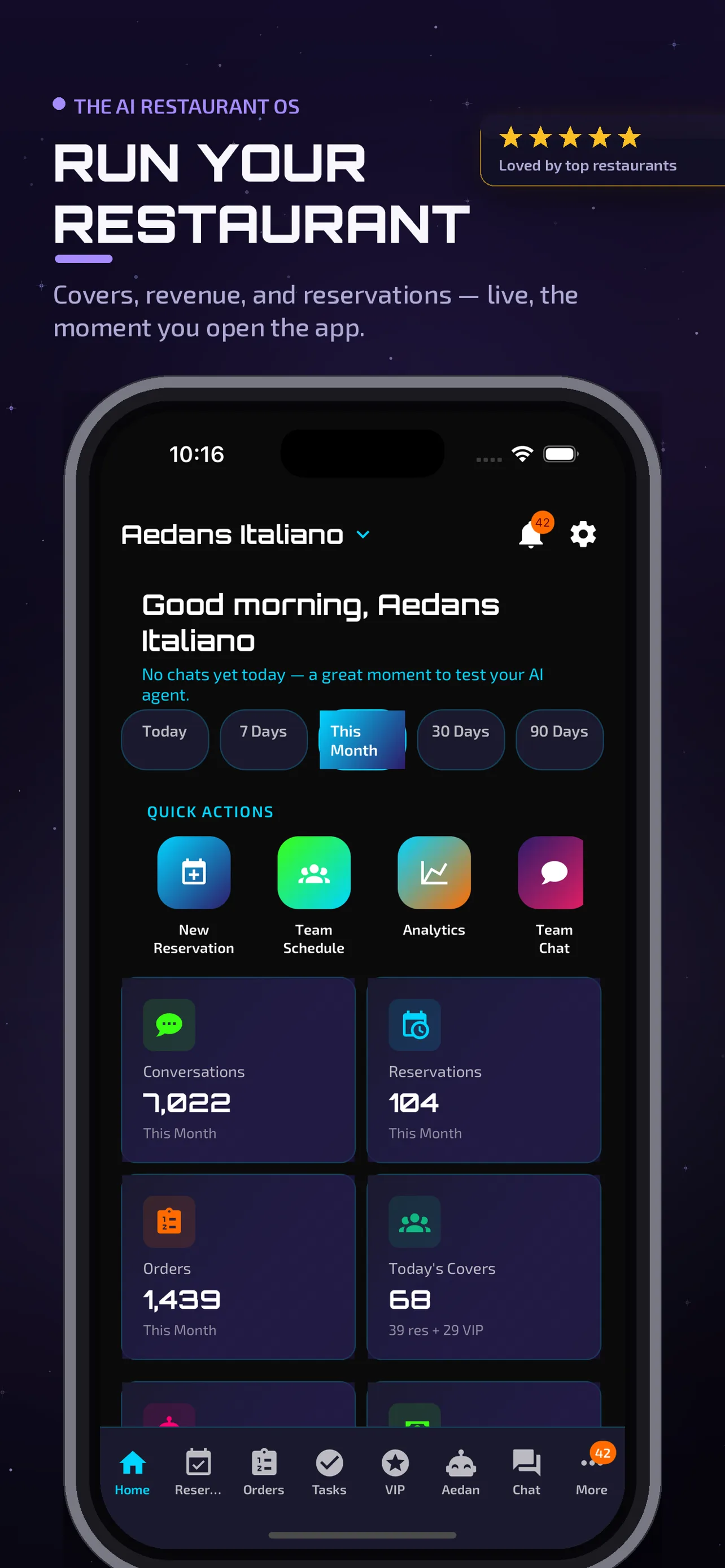
Every site on your phone
Free iOS and Android apps plus a full web dashboard — manage the whole portfolio from anywhere.
Built for hospitality groups, not just chains
Every location runs at its own scale, on its own plan, with its own team — surfaced through real product screens below.
Size the software to each site's actual scale
Hospitality groups rarely look like chains. A destination steakhouse, a coffee-and-pastry concept with three staff, and a seasonal pop-up shouldn't pay the same. Aedan Rose puts each restaurant on its own independent plan, so you never overpay for the small sites or under-resource the flagship.
- Independent plan per restaurant — Free, Online Ordering, Full House, or Manager
- Each restaurant is its own billing entity inside your account
- A busy site never eats a quiet sibling's resources
Flip between locations, each fully isolated
Logged in as an owner, the dashboard surfaces a restaurant switcher in the top bar. Click to flip between the bistro, the café, and the steakhouse. Each switch loads that location's reservations, its roster, its menu, its analytics, its floor plan, and its billing — never bleeding across sites.
- Data isolation enforced at the database layer (PostgreSQL + Firestore)
- Your steakhouse's VIP list isn't visible to café staff
- No shared customer database across sites unless you opt in
Every location has its own roster and permissions
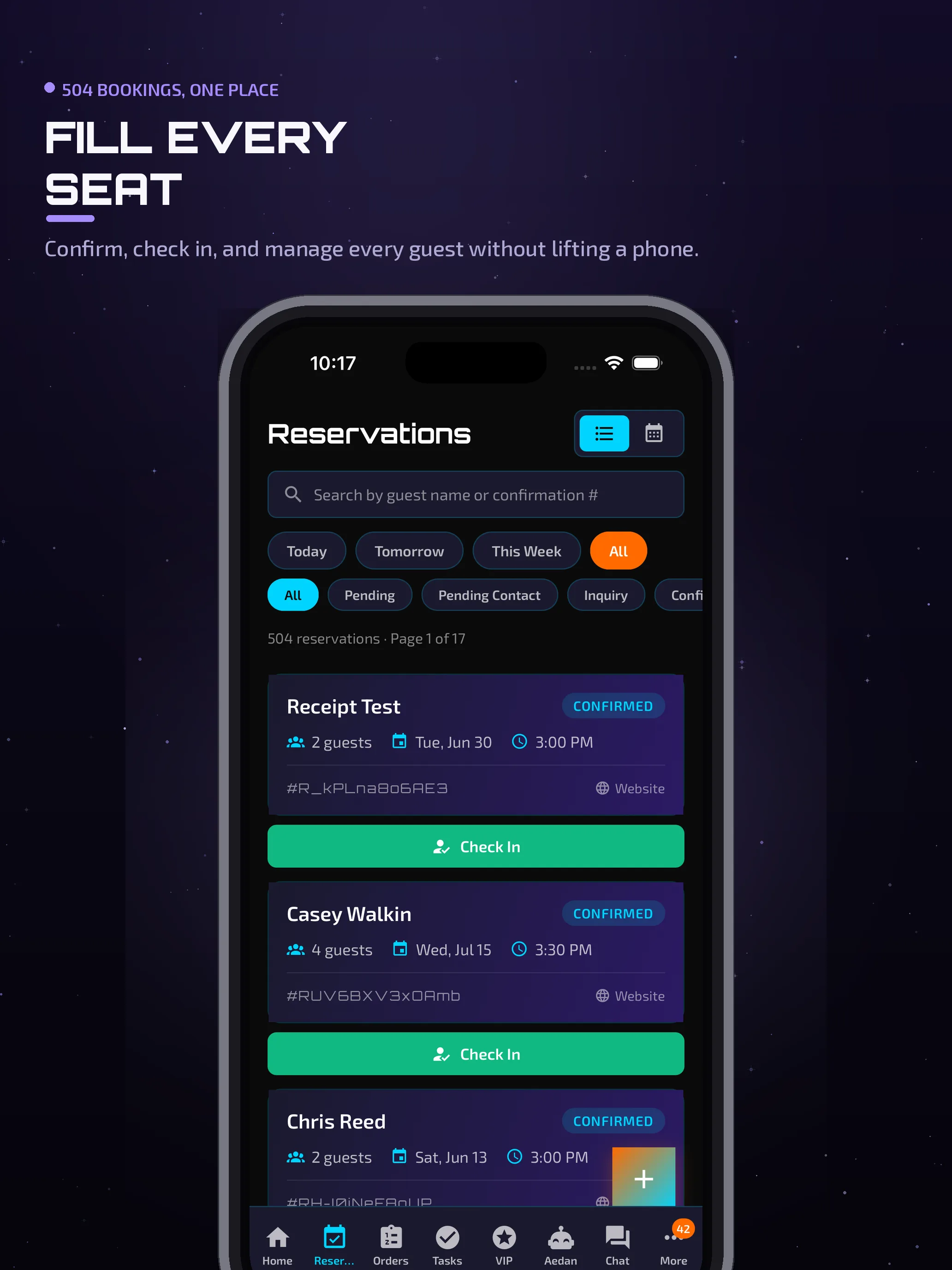
Each restaurant carries its own employee roster and role assignments — owner, manager, host, server, kitchen, plus custom roles. A general manager can be admin at one location and a server at another. Owners see everything; managers see only their assigned location; servers see only their own schedule.
- Role-based permissions scoped per restaurant
- Email scoped per site — no cross-location collisions
- Air-gapped by default, so nothing leaks between sites
See every restaurant, then jump into any one
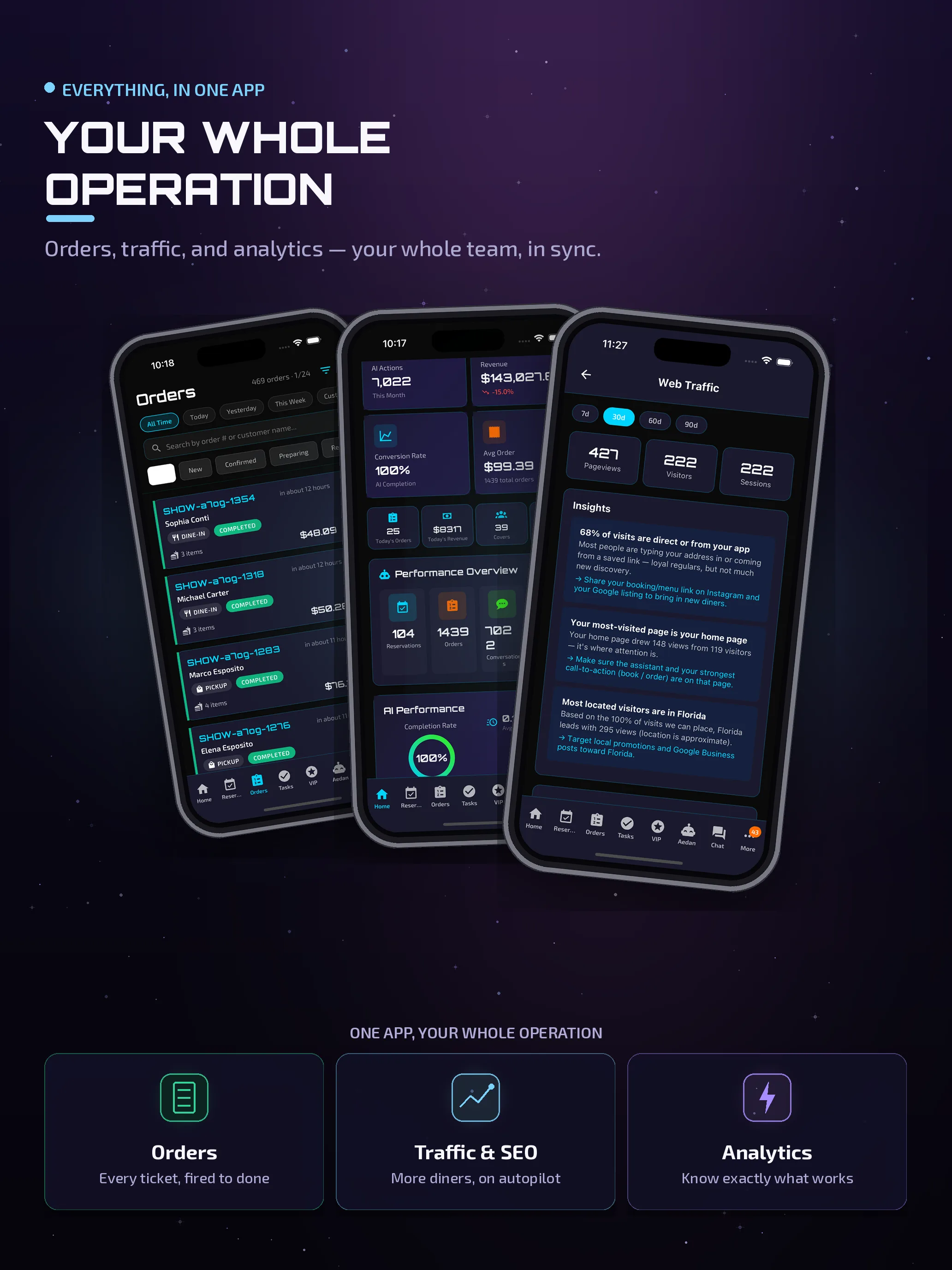
Roll up the group on the big screen, then manage any single site from your phone — live 24-hour revenue, employees and reservations per location, one tap in.
restaurant_id, and every query filters on it. The AI's vector memory is partitioned by restaurant. There's no shared customer database across your sites unless you explicitly opt in. This matters legally (data ownership), operationally (your steakhouse's VIP list isn't visible to café staff), and competitively (one location's analytics aren't diluted by another's).
Cross-location analytics, opt-in
Per-location isolation is the default, but as an owner you can opt into cross-location analytics: portfolio-level revenue, booking trends, and customer overlap. Useful for the holding-company view, dangerous if it's the only view. Aedan Rose gives you both — drill into a single restaurant or zoom out to the whole portfolio, never both at the same time by accident.
The bill that actually makes sense
Each restaurant's monthly bill is a separate line item — Manager for the flagship, Full House for the bistro, Online Ordering for the café, Free for the pop-up. Add or remove locations any month. Move a location up or down a tier mid-cycle with prorated billing. Cancel a single location without affecting the others. Compare this to most enterprise contracts where any tier change means a quarterly renegotiation and a new master agreement.
- Independent plan tier per restaurant (Free through Manager)
- One owner login, instant restaurant switcher in the dashboard
- Data isolation enforced at the database layer
- Per-restaurant billing lines on a single statement
- Mid-cycle upgrades and downgrades, prorated
- Optional cross-location analytics for the holding-company view
- Role-based permissions scoped per restaurant
- Choose owner-shared or per-restaurant Stripe Connect payouts
Perfect Start. Guest-facing AI, online ordering, VIP section bookings and Stripe — ideal for a pop-up or quiet site.
Adds revenue analytics, loyalty/CRM, team chat and task management for a busier concept.
Inventory, geofenced timeclock, real-time monitoring and the Money Dashboard for a full-service site.
Everything, plus the agentic Aedan Rose Copilot and a dedicated account manager — perfect for the flagship.
Usage is included with every plan. Mix and match across your locations. Full plan comparison →
Who this is built for
Aedan Rose's multi-location model fits three operator profiles. Hospitality groups with three to twelve concepts in a single city. Restaurant chains expanding from a single flagship into satellite locations. Multi-concept owners who run a fine-dining room, a fast-casual concept, and a coffee shop under one parent entity.
What it isn't built for: 100+ location franchise chains. Those need a custom enterprise contract regardless of vendor. If that's you, the standard answer to "do you support enterprise?" is yes — but reach out via our contact form so we can scope it properly.
Stop overpaying enterprise rates on your small sites
Legacy platforms bill every location the same and lock tier changes behind a renegotiation. Aedan Rose lets you right-size each restaurant this month — and switch a location up or down the moment its season turns. Start free with one location today.
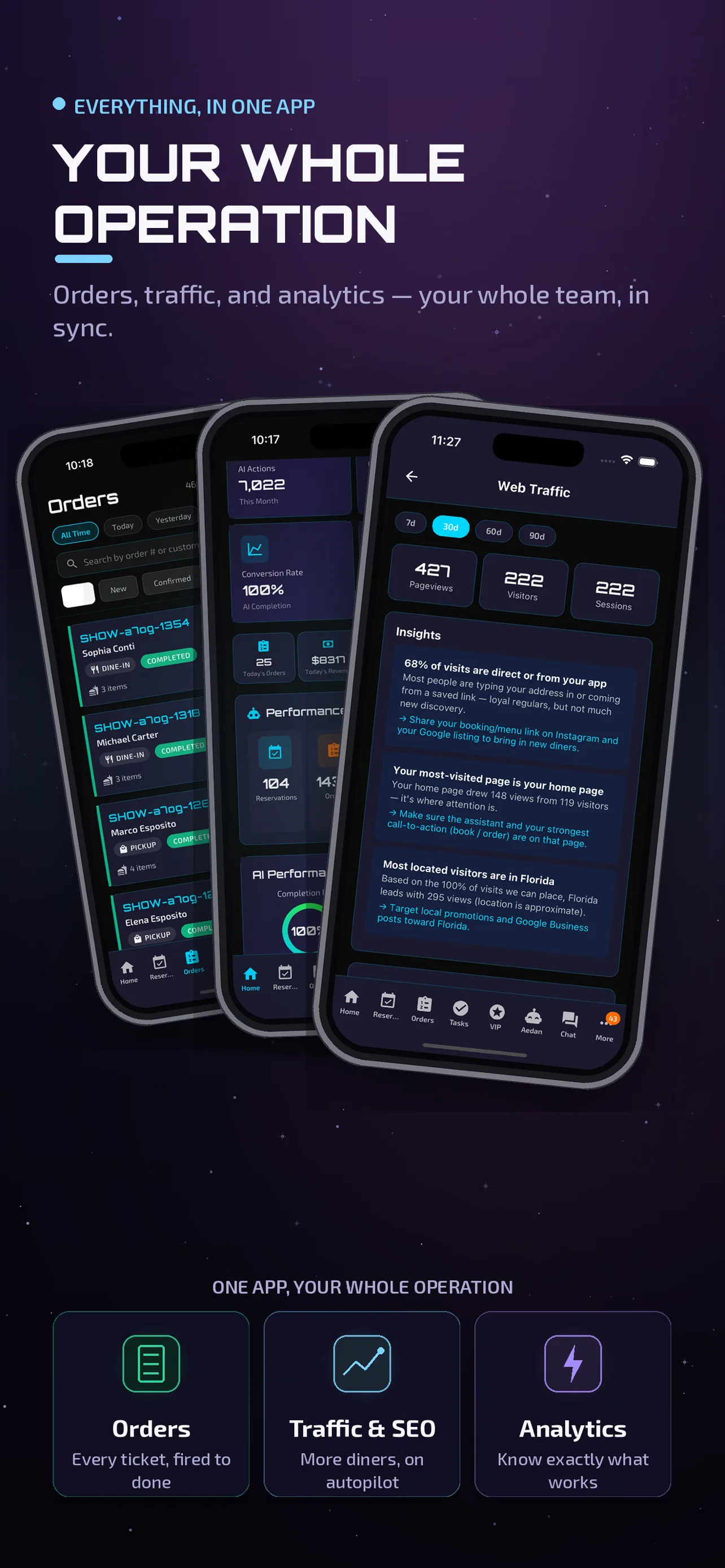
Every location, in one app
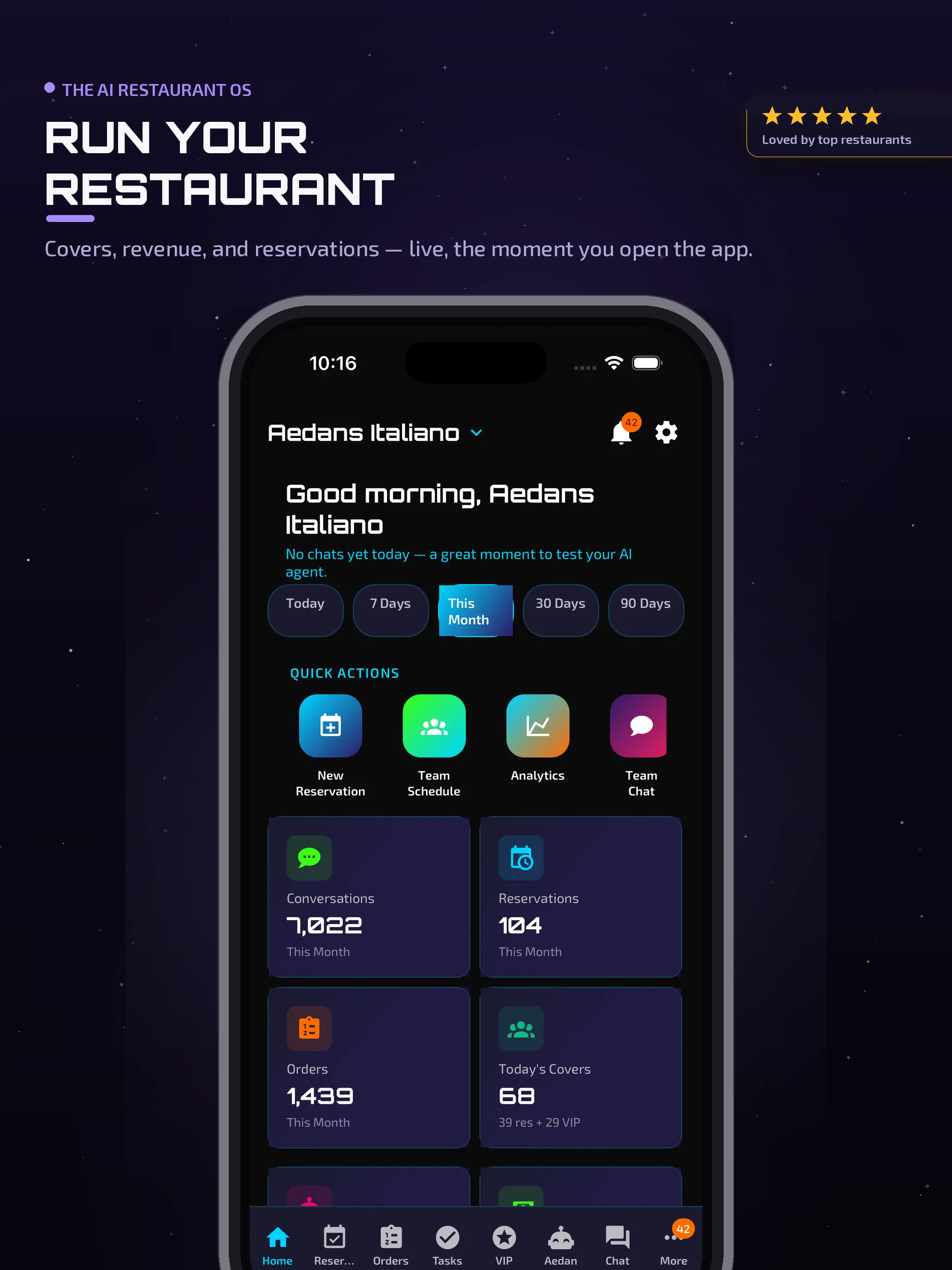
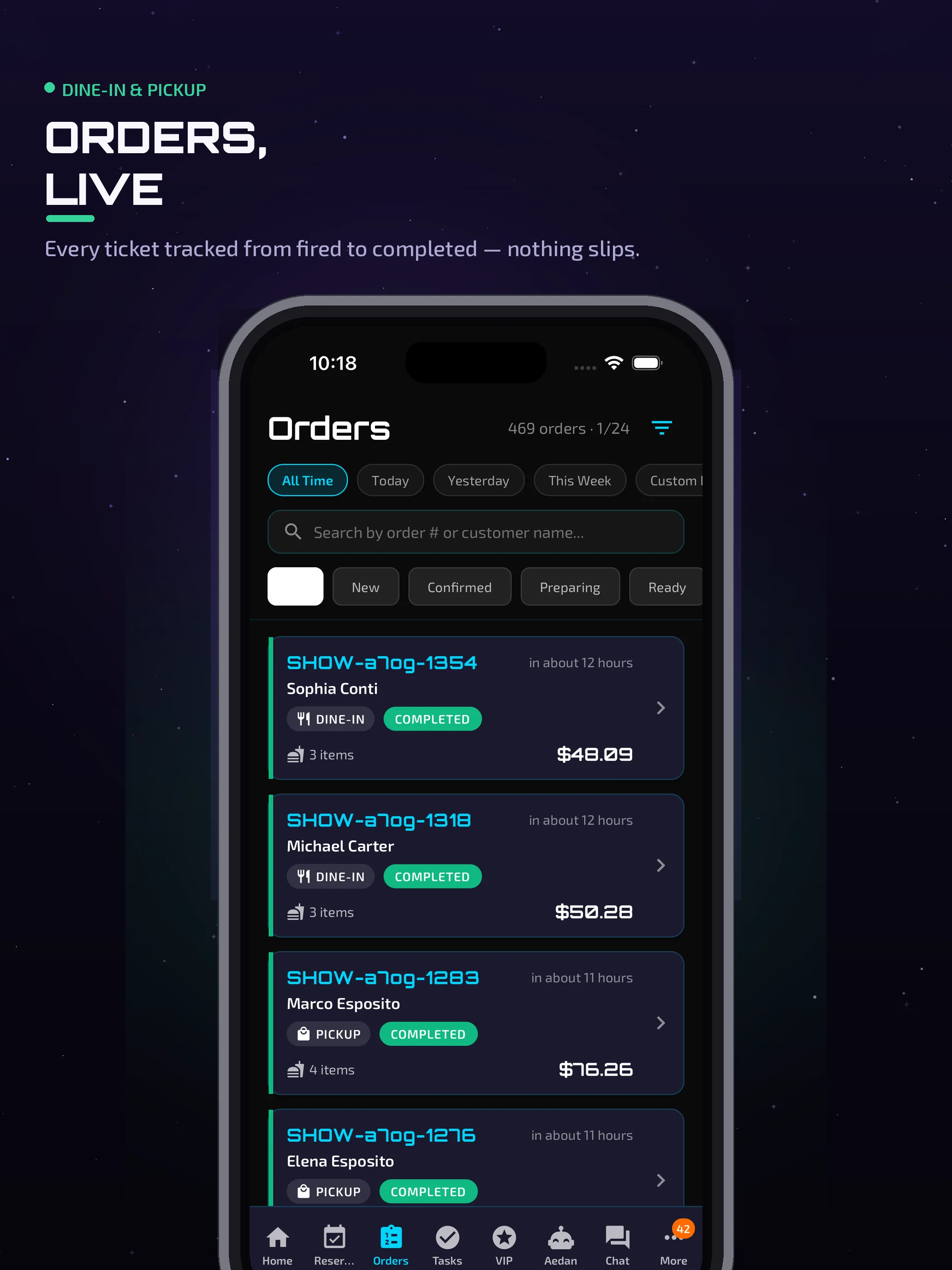
Switch between restaurants, watch per-location revenue and activity, and jump into any single site — all from your phone. Free iOS and Android apps put the whole portfolio in your pocket, with a full web dashboard on the desktop.
Try the multi-location model with one location first
Start with a single restaurant on the free 30-day trial. Add more locations later — each on whichever plan fits.
Last updated: July 24, 2026 · Aedan Rose